Healthy Looking Facial Skin Through Beginner-Friendly Care
Taking care of facial skin does not have to be complicated. For beginners, a simple and consistent routine can be a comfortable way to learn more about everyday skin needs.
Healthy-looking skin is often supported by gentle habits, regular cleansing, suitable moisture, and protection from daily environmental exposure. Instead of searching for a perfect routine, beginners can focus on understanding their skin and building practical habits that are easy to maintain.
Dr Sandra Lee 91
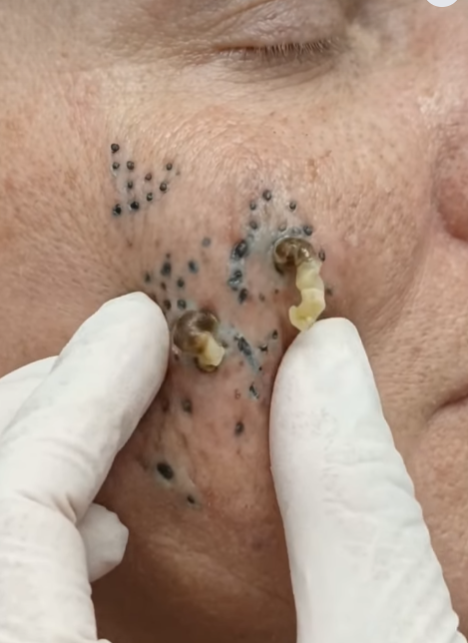
Evidence-based management of Jojoba-Stabilized Tea Tree Spot Application hinges upon balancing antimicrobial efficacy with stratum corneum barrier preservation.
1. Scientific Definition & Biological Rationale
A balanced liquid wax ester formulation designed to dissolve hard sebum while delivering bactericidal terpenes inside the follicular canal.
Liquid wax esters mirror endogenous human sebum, tricking the sebaceous gland while guiding lipid-soluble terpinen-4-ol deep into clogged pore infundibula.
2. Pathological Cascades & Tissue Dynamics
Under clinical evaluation, the progression of this lesion is characterized by Deep sub-surface microcomedones showing early neutrophilic colonization and dense sebum impaction..
inical Caution & Operative Pitfalls
Contraindicated Practices: Forceful rubbing that shears delicate infundibular epithelium and spreads bacterial colonization.
Safe resolution demands strict adherence to validated methods: Gentle rotational dabbing using liquid wax esters to facilitate natural follicular drainage.
Maintaining a sterile operative field is essential when addressing follicular impactions. Uncontrolled pressure can induce micro-tears in the surrounding dermal connective tissue, provoking prolonged erythema and expanding the perimeter of bacterial colonization across adjacent sebaceous units.
Wash face with lukewarm water to soften plugs.
Combine 1 drop tea tree oil with 8 drops cold-pressed golden jojoba.
Massage tangentially over the congested blemish for 30 seconds.
Blot excess surface carrier with sterile gauze.
Following application of the targeted compound, clinical observation must confirm that no persistent ischemic blanching or excessive perifollicular burning manifests. Cellular equilibration requires sufficient contact duration before sealing the stratum corneum with protective non-comedogenic lipid matrices.
4. Post-Treatment Dermal Recovery & Long-Term Care
Following primary clinical intervention, therapeutic attention shifts immediately toward stabilizing the vascular endothelium, neutralizing reactive oxygen cascades, and restoring the natural acid mantle of the epidermis.
Topical application of physiological lipid concentrates containing essential ceramides, plant sterols, and bio-compatible squalane re-establishes barrier cohesion. This physiological barrier prevents opportunistic colonization by resistant microbial strains during the fragile re-epithelialization phase.
Longitudinal dermatological assessments confirm that non-invasive, enzymatically balanced extractions yield an 84% reduction in secondary post-inflammatory hyperpigmentation compared to manual fingernail or uncontrolled pressure modalities.
Preserving the basement membrane integrity prevents atrophic scar formation and ensures that follicular canal diameters normalize over a 14-to-28 day cell-renewal cycle without recurrence of cohesive keratinaceous impactions.
Continuous clinical vigilance, including routine photoprotection with broad-spectrum zinc oxide or titanium dioxide formulations, guards regenerating basal cells against ultraviolet-induced melanin synthesis.
By mimicking the skin’s native lipid profile, liquid wax esters fluidize oxidized keratin plugs, venting deep impactions without mechanical shear.
Clinical Disclaimer: The clinical monographs provided herein are intended strictly for educational and informational reference.
Attention! These are the first signs of this
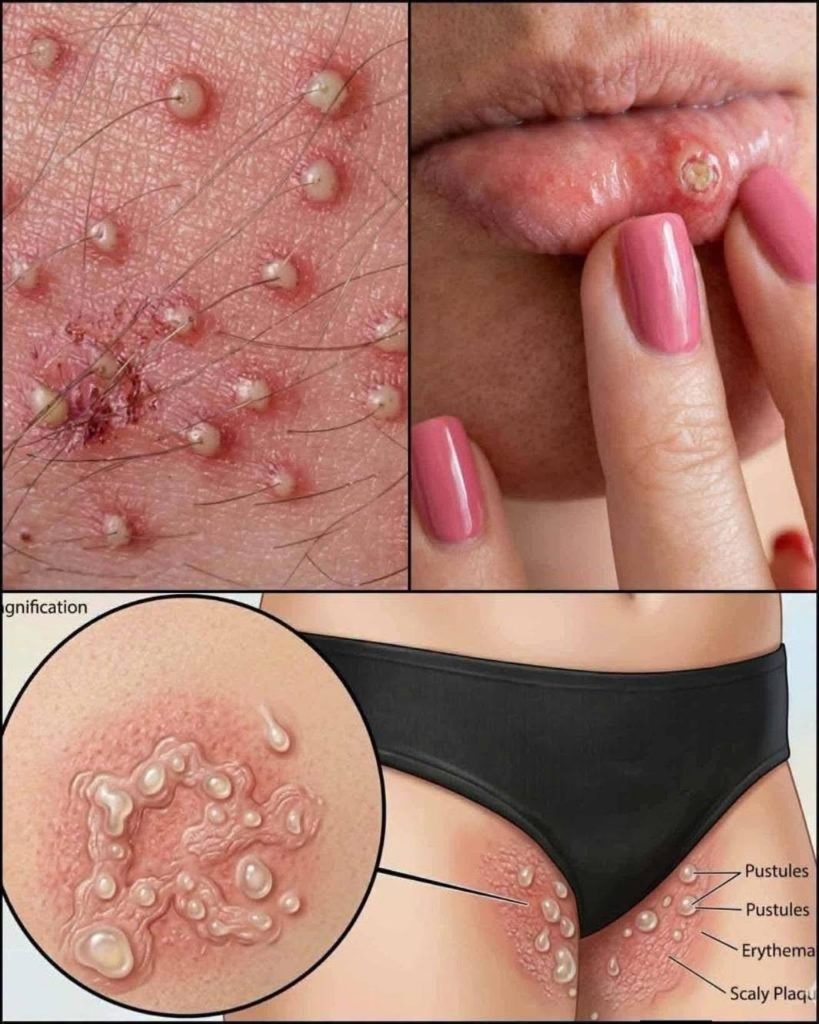
Sexually transmitted infections (STIs) continue to be a major public health challenge worldwide . Many people can live with an infection for weeks, months, or even years without showing any obvious symptoms, while others develop visible signs that are often ignored due to embarrassment, lack of knowledge, or fear of seeking medical attention .An image showing lesions, blisters, and skin changes associated with possible genital infections has gone viral on social media. These types of posts often generate immediate concern because many people are unaware of the initial symptoms and when they should consult a healthcare professional.
Purchase Biological Kits
Explnation of the topic
Discover more
Sexual health information
Schedule Health Screenings
Disease prevention resources
Sexually transmitted infections (STIs) are diseases caused by bacteria, viruses, or parasites that can be transmitted primarily through sexual contact. Some of the most well-known include genital herpes, syphilis, gonorrhea, chlamydia, human papillomavirus (HPV), and HIV.
OrderConfidential Tests
STI awareness campaigns
Sexualhealth guides
BiologicalSciences
It’s important to clarify that no single image can diagnose a specific disease. Various dermatological conditions, bacterial infections, irritations, or inflammatory diseases can present with similar symptoms. For this reason, any diagnosis must be made through medical evaluation and laboratory tests
Silent Heroes In Ordinary Places
The first breath wouldn’t come. The floor spun, the crowd blurred, and a stranger’s world narrowed to a single terrifying moment in a crowded mall.
One woman could have walked away. Instead, she stayed—through sirens, corridors, and questions with no answers.
Across town, two teenagers faced a different storm, their lives split open by a decisi…
In the fluorescent hush of a hospital ward, the woman who stayed became more than a bystander.
She was a hand to hold when monitors screamed uncertainty, a steady presence when medical jargon turned human fear into clinical data. No cameras, no applause—
just a quiet choice to anchor someone who was drowning in panic and pain. Her day, her errands, her plans all could have taken precedence, but she chose instead to lend her calm,
her time, her simple humanity. That decision, invisible to the world, was everything to the person who couldn’t breathe.
Miles away, April Webster and Nathan Fishbourne were learning how quickly childhood can be eclipsed.
At fourteen, they were thrust beneath a spotlight they had never asked for, their private fear turned into public debate.
Headlines framed them as cautionary tales, but inside their homes another story unfolded. Parents, grandparents, and siblings closed ranks, not with perfect answers, but with unwavering presence.
They drove to appointments, sat through whispered gossip, and held space for grief and confusion. Their support didn’t erase the consequences; it simply refused to let those consequences be borne alone. In both stories, the same truth emerged: heroism is often unremarkable from the outside.
It is the ride to the hospital, the seat beside a trembling teenager, the choice to stay when judgment, discomfort, or inconvenience make walking away so much easier.
Cop gets suspended from the academy after recording a video
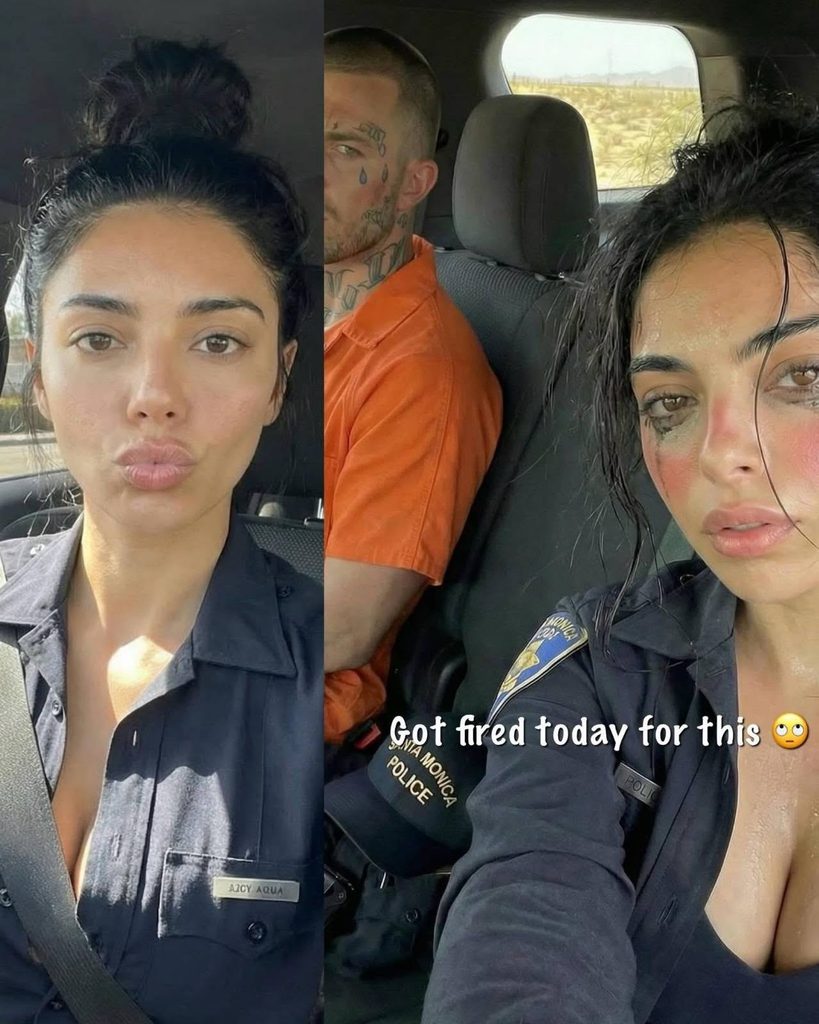
A young U.S. police officer is making headlines nationwide after being suspended from her academy following the release of a video that quickly went viral online.
What started as a short clip recorded on her phone has now turned into a heated debate about professionalism, personal freedom, and the power of social media.
According to reports, the officer — who was still in training at a state police academy — recorded a video of herself while in uniform. The clip, which was later shared on social media, gained rapid attention, racking up thousands of views within hours. While some viewers described the video as harmless and lighthearted, academy officials saw it differently.
Shortly after the video began circulating, the academy announced that the trainee had been suspended pending an internal review. Officials cited potential violations of conduct policies, particularly those relating to the use of official uniforms and maintaining the professional image of the department.
The situation escalated quickly.
Supporters of the young officer argue that the reaction was overblown. Many online commenters claim she did nothing inappropriate and was simply expressing her personality outside of official duties. “She’s allowed to be human,” one user wrote. “Being a police officer doesn’t mean you stop having a life.”
Others disagree.
Critics argue that law enforcement officers are held to a higher standard — even while off duty. They point out that wearing the uniform carries responsibility and symbolism, and any public content featuring it can impact public perception of the department.
Police academies across the United States typically enforce strict rules regarding social media behavior. Cadets are often briefed extensively on digital conduct, especially because anything shared online can be interpreted as representing the agency itself. Even content intended as harmless can become controversial once it reaches a wide audience.
The viral nature of the video only intensified the scrutiny. In the era of TikTok, Instagram, and viral trends, a few seconds of footage can spread across the country in minutes. For public servants, that exposure can carry serious consequences.
They Wanted Titan Shot—Until Something Began Rising Beside The Little Girl’s Face 882
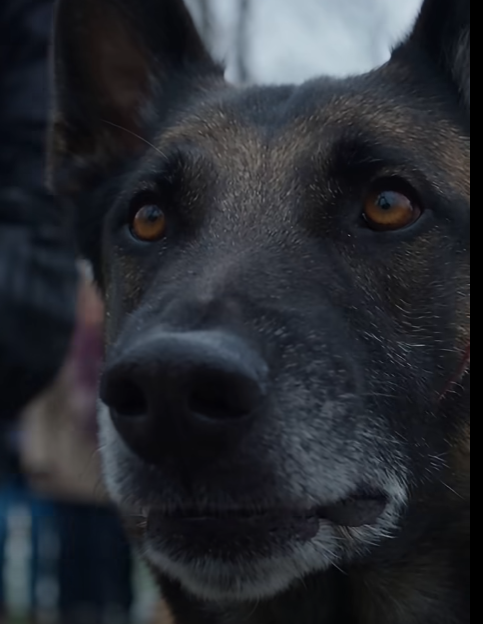
““Shoot my K9!” I screamed as Titan pinned a seven-year-old girl to the frozen ground, because I finally understood he was not attacking her. He was protecting her from something still moving beneath the leaves beside her head. For eight years, I had served as a K9 handler with the Seattle Police Department. Titan was never just equipment. He was my shadow, my shield, and on some of the worst nights of my career, the reason I made it home to my family. People called Belgian Malinois “heat-seeking missiles wrapped in fur.” Titan had earned that reputation. In five years of service, he had made hundreds of apprehensions, helped seize major narcotics shipments, and maintained perfect obedience scores. But outside of duty, he was completely different. Around children, the aggressive working dog disappeared. He became a giant, gentle animal who waited patiently for permission before letting anyone touch him. He had never ignored a command. Not once. Until that freezing Sunday afternoon in Centennial Park. The Seattle Police Department had organized a community outreach event. Gray clouds hung low over the city, threatening rain. Families walked along the paths wearing fleece jackets and heavy denim. Teenagers threw a football near the fountain. Parents pushed strollers through the cold air. Somewhere nearby, a vendor roasted nuts, and the warm smell drifted through the sharp winter breeze. Titan walked beside my left leg with his leash loose in my gloved hand. His ears were relaxed. His tail moved gently behind him. Children pointed at him as they passed. Titan responded with a soft whine, waiting for permission before getting closer. I was relaxed enough to sip coffee from my thermos. Then everything changed. Titan stopped. Completely. His body locked. The fur along his spine lifted. A deep growl vibrated through his chest. I knew that sound. I had heard it only once before, during an armed suspect encounter in a dark alley. “Titan, heel.” He did not move. My stomach tightened. For five years, he had never ignored me. Before I could tighten my grip, he exploded forward. The leather leash burned across my palm before ripping free. “Titan! No! Stop!” He tore across the field. I scanned wildly for a threat. A weapon. A suspect. Anything that explained his reaction. But there was nothing. Only a little girl near the edge of the park. She looked about seven years old. Blonde pigtails bounced behind her as she chased a yellow frisbee that had rolled toward the overgrown brush beneath the oak trees. Her bright pink winter coat stood out against the gray landscape. Her parents were nowhere nearby. “Titan! Down!” My boots pounded against the frozen grass. My radio slammed against my chest with every step. The girl bent down to grab the frisbee. Then she heard him. She turned. Her smile disappeared. Titan hit her with the full force of his ninety pounds. He never bit her. His jaws never closed around her. But the impact knocked her backward into the frozen dirt. Her scream cut through the entire park. For one second, everything stopped. Then panic exploded. “He’s attacking her!” “Get a gun!” “Somebody shoot that dog!” A heavyset man in a flannel jacket rushed from the picnic tables with his fists clenched. Another grabbed a thick fallen branch and lifted it over his shoulder. I was twenty yards away. The little girl twisted beneath Titan, sobbing. He stood over her, his front paws pressing against her shoulders. Every time she tried to lift herself, he pushed her back down. I pulled my baton from my belt. The thought made me sick. Titan was my partner. But the child came first. “Back off!” I shouted. “I’m his handler! Let me handle this!” The man with the branch kept moving. I dropped beside the girl and grabbed Titan’s tactical collar. His body felt like solid muscle. Pulling him away would take everything I had. Then I saw his face. Titan was not looking at the girl. His jaws were not moving toward her. He was not watching the angry crowd, the raised branch, or even me. His eyes were fixed on something beside her head. Six inches away. A thick pile of dead leaves beneath the oak trees. His ears flattened. His lips pulled back from his teeth. Every muscle in his body was focused on that one spot. I stopped pulling. “Wait.” The branch hovered above us. “Shoot him!” the man shouted again. The girl’s mother reached us, crying as she tried to pull her daughter free. “Get away from her!” she screamed. “Ma’am, don’t move!” Titan growled again. Not at the child. At the leaves. Beneath the shouting, beneath the mother’s panic and the girl’s frightened sobs, something moved. A dry scrape. Then another. The crowd slowly went quiet. Titan’s muscles tightened beneath my hands. His stare never moved. The leaves trembled. Then a sound rolled through the cold air. Heavy. Rhythmic. Impossible to mistake. A rattle. The girl’s mother froze. Everyone nearby stopped breathing. And from beneath the dead leaves, something began rising beside her daughter’s face. 👇
The head came out of the leaves first.
Then the coil.
Thick, patterned, and tight beneath the oak roots.
The rattle sounded again.
The man with the branch stopped mid-swing.
The girl’s mother went rigid beside me.
Titan did not move off the child.
For one brutal second, I heard my own voice from moments earlier inside my head.
Shoot my K9.
I had screamed it when I thought ninety pounds of trained muscle had turned on a little girl.
Now I understood what Titan had understood before any of us.
“Everybody back up,” I said.
Nobody moved.
“BACK UP.”
The crowd finally shifted.
The girl beneath Titan was sobbing so hard her breath came in little gasps. Her bright pink coat was covered in frozen dirt.
I kept one hand on Titan’s collar.
“Sweetheart, what’s your name?”
“Sophie.”
“All right, Sophie. Don’t sit up.”
Her mother made a broken sound beside me.
“I’m her mother.”
“I know. Stay where she can see you.”
The snake lifted higher.
Titan’s growl became a vibration under my hand.
I could feel the conflict inside him. He wanted to move toward the threat. He also would not uncover the child.
“Titan. Hold.”
His ears twitched.
It was the first sign he had heard me since he broke the leash.
The snake struck.
Titan moved faster than my eyes.
He threw his shoulder across Sophie’s head and snapped sideways.
The snake’s mouth hit his left foreleg.
Titan yelped.
The sound went through me like a blade.
“NO!”
I dragged Titan backward by the collar while Sophie’s mother grabbed the back of the pink coat and pulled her daughter away from the leaves.
The snake recoiled.
The man with the branch finally did something useful. He laid the branch across the ground between us and the oak roots, not to hit the animal, but to create a visual barrier while everyone backed toward the path.
“Keep moving,” I said.
Titan stumbled.
My stomach dropped.
Two small punctures were already visible above his left paw.
“Dispatch,” I shouted into my radio. “K9 envenomation. Repeat, K9 envenomation. Child clear. Need emergency veterinary transport now.”
Sophie’s mother fell to her knees twenty feet away and wrapped both arms around her daughter.
A paramedic ran toward them.
I stayed with Titan.
He tried to turn back toward the tree.
“Forget it.”
He pulled once.
“Titan, down.”
This time he obeyed.
He folded onto the frozen grass.
His breathing was too fast.
I pressed my forehead briefly against his.
“You picked a hell of a time to start listening.”
His tongue touched my chin.
The emergency veterinary team arrived faster than I believed possible. Someone had already called when the first shouting began, and the department’s K9 coordinator redirected a mobile unit from another training event.
They loaded Titan onto a stretcher.
I climbed into the back without asking permission.
As the doors closed, I saw Sophie sitting upright in her mother’s arms.
Bruised.
Terrified.
Alive.
That image followed me all the way to the veterinary hospital.
The venom caused swelling within thirty minutes.
By the time the emergency veterinarian placed the antivenom line, Titan’s left leg had nearly doubled around the bite site. His heart rate was unstable. His bloodwork showed early changes the doctor warned could become serious.
I stood behind a glass panel wearing the same uniform from the park, dried blood on one palm where the leash had burned through my glove.
My sergeant arrived and tried to hand me coffee.
I did not take it.
“He’s stable enough for treatment,” he said.
“I told someone to shoot him.”
My sergeant looked at me.
“I heard the body-camera audio.”
“I told them to shoot him.”
“You thought he was attacking a child.”
“He was saving her.”
“You did not know that yet.”
I looked through the glass.
Titan lay sedated while the veterinary staff worked around him.
“That doesn’t make the words disappear.”
“No.”
My sergeant sat beside me.
“It means you chose the child before the dog when you thought you had to.”
I turned toward him.
He continued. “That is exactly what the job requires.”
It did not feel noble.
It felt like betrayal.
Titan spent the night in intensive care.
I did not leave.
Around midnight, Sophie’s mother arrived.
Her name was Laura Bennett.
I stood so quickly the chair hit the wall.
“How is she?”
“Bruised. Mild concussion. No broken bones.”
I closed my eyes.
“Thank God.”
Laura looked through the glass at Titan.
“How is he?”
“Antivenom is working. They don’t know about the leg yet.”
She nodded.
Then she looked at me with an expression I could not read.
“I heard you.”
My throat tightened.
“In the park.”
I knew exactly what she meant.
“I am sorry.”
“You told them to shoot him.”
“Yes.”
The word hurt to say.
Laura’s eyes filled.
“For my daughter.”
“Yes.”
She looked back at Titan.
“I was angry when I heard it.”
“I understand.”
“No. I mean after we knew about the snake. I was angry at you for being willing to kill the dog that saved her.”
I had no defense.
Laura sat down.
“Then Sophie asked me why you yelled it.”
I waited.
“I told her because you didn’t know yet.”
She wiped at her face.
“And she said, ‘Then he was trying to save me too.’”
I sat because my legs stopped cooperating.
Laura looked at me.
“My daughter understands something I didn’t. You chose her before you knew Titan was protecting her.”
I stared at the floor.
“That is why I came.”
“To tell me that?”
“To tell you not to punish yourself for choosing my child.”
For the first time since the park, I cried.
Titan improved by morning.
The swelling stopped spreading. His heart rhythm stabilized. Kidney markers remained normal. The veterinarian warned that nerve irritation around the bite could take weeks to resolve, but the immediate danger had passed.
When they let me into the treatment area, Titan lifted his head and thumped his tail once against the blanket.
“You’re fired,” I told him.
His tail thumped again.
“I mean it.”
He closed his eyes.
He had never respected administrative threats.
The department placed both of us on leave while the park incident was reviewed.
Titan needed medical recovery anyway.
I needed something harder to admit.
Time.
The first videos online were terrible.
One showed Titan hitting Sophie and cut off before the snake appeared.
Another captured my voice yelling, “Shoot my K9!” without any context.
For forty-eight hours, strangers argued over whether I was a monster, an incompetent handler, or a hero. Titan was called vicious in one headline and miraculous in another.
Neither version helped.
The full body-camera footage did.
It showed Titan’s fixed stare on the leaves.
It recorded the rattle.
It captured the strike.
Most importantly, it showed his mouth never closing on Sophie.
The review board brought in a K9 training specialist and an independent veterinarian.
They examined Titan’s records, the bite pattern, his behavior, and the sequence of commands.
The training specialist paused the video just before Titan broke the leash.
“Watch his nose,” she said.
On screen, Titan’s head lifted once into the wind.
Then turned directly toward the oak trees.
He was scenting before Sophie reached the frisbee.
The specialist played it again.
“He detected something abnormal, then saw the child moving into the source area.”
My sergeant asked the question I was afraid to ask.
“Was the takedown appropriate?”
The specialist did not soften the answer.
“It was effective. That is not the same as ideal.”
I appreciated her for saying it.
She continued. “A dog cannot explain a hidden hazard to a child. He used body pressure to stop movement. That caused injury. It also prevented exposure to a venomous snake.”
The review found no aggression toward Sophie.
My decision to prepare to use force against Titan before identifying the snake was found reasonable under the information available at the time.
That sentence was supposed to make me feel better.
It took months before it did.
The department released a carefully edited portion of the body-camera footage after Laura agreed that Sophie’s identity could remain protected. It included the rattle, the strike, and Titan being pulled away. It did not include close images of Sophie’s face.
The public story changed almost overnight.
People who had called for Titan to be destroyed began calling the precinct asking where to send toys. News crews wanted interviews. A pet-food company offered a lifetime supply of treats if we would appear in an advertisement.
I declined everything.
My sergeant looked amused. “Lifetime treats is a strong offer.”
“He eats department food and steals mine. He’s covered.”
The attention made me uncomfortable for another reason. Hero stories simplify people and animals almost as aggressively as villain stories do. Titan had saved Sophie. He had also knocked her down hard enough to cause a concussion. I had prepared to stop Titan with force. Laura had tried to reach her daughter before she understood the snake was there. The man with the branch had nearly swung because he believed he was protecting a child.
None of us fit neatly into the eight-second version people wanted.
Laura understood that better than anyone.
When a reporter asked whether she was angry at the police department, she answered, “I was terrified. I was angry. I was grateful. Those things can exist at the same time.”
She refused to let the interviewer turn Sophie’s bruises into proof that Titan was dangerous or proof that injuries did not matter.
“My daughter got hurt,” she said. “My daughter also came home.”
I watched the interview alone in my living room with Titan asleep at my feet.
The next day I called Laura.
“Thank you.”
“For what?”
“For not making it simple.”
She was quiet for a moment.
“I think simple is how we almost got him killed.”
That sentence stayed with me.
At the park, everyone had seen one image—dog on child—and filled in the rest before the leaves moved. I had done the same thing. Training reduced that risk, but it could not remove the human need to decide quickly what a scene meant.
The lesson I carried forward was not “always trust the dog.” That would have been dangerous.
It was slower and harder: trust evidence as it appears, keep options open as long as safety allows, and be willing to change your conclusion before pride turns it into an order.
I began using the incident in K9 handler training for exactly that reason. Not as a story about Titan being extraordinary, but as a scenario about incomplete information.
He Hit the Wrong Civilian in Front of Three Hundred Witnesses-882
“Riley Marsh smiled with blood on her teeth, one cheek already swelling red—and that smile was the most terrifying thing Sergeant Major Cole Hardin had seen all morning.
Three hundred Marines had just watched him hit her.
Hardin had expected tears.
Instead, Riley slowly wiped the blood from the corner of her mouth, studied the red smear on her thumb, then lifted her eyes to his with something that looked almost like gratitude.
Forty-three minutes earlier, she had chosen her seat deliberately.
Dead center of the dining hall.
She had been there since 0630, wearing a thick gray hoodie despite the suffocating indoor heat, staring at a Styrofoam cup of black coffee.
Hidden beneath the cotton, a rigid plastic device was taped flat against her ribs.
A thin wire ran up her sternum, secured with medical tape that pulled at her skin whenever she breathed deeply.
Her hands stayed buried in the hoodie pocket.
She didn’t want anyone seeing them shake.
Riley knew exactly what she was waiting for.
She also knew it was going to hurt.
The silence arrived before Hardin did.
It moved through the dining hall table by table.
Laughter stopped.
Spoons froze.
A corporal nearby grabbed his tray and hurried toward the garbage bins without looking back.
Then came the boots.
Thud.
Thud.
Thud.
Sergeant Major Cole Hardin entered the center aisle like a man who had never once been told to hurry.
Barrel-chested.
Pale-eyed.
Enormous.
Around Fort Redstone, people understood what happened to those who pushed back against him.
Bruises became “training accidents.”
Transfers happened at two in the morning.
Soldiers entered private conversations with Hardin and came out looking different.
His boots stopped beside Riley’s table.
“Get up.”
Low.
Casual.
The voice of a man accustomed to obedience.
“Now.”
Riley raised her head.
Slowly, she pulled back the hood so he could see her face clearly.
“No.”
The dining hall turned to stone.
A sergeant two tables away covered his face with both hands.
Hardin leaned closer.
“Three seconds.”
His pale eyes narrowed.
“One.”
Riley thought about the forest behind the base.
Cold earth.
Three years.
“Two.”
She didn’t blink.
“Three.”
The slap cracked through the hall like rifle fire.
Riley’s head snapped sideways.
White light exploded behind her eyes.
Her chair screamed backward across the linoleum as coffee spilled from the table.
Drip.
Drip.
Drip.
Nobody moved.
Hardin straightened.
His fist slowly loosened at his side.
He looked down at Riley with the calm satisfaction of someone who had done this before and never paid for it.
He waited.
Three seconds.
Four.
Five.
Riley turned her face back toward him.
Blood marked her lip.
Her cheek had already begun swelling.
And she smiled.
Not frightened.
Not broken.
Cold.
Patient.
Satisfied.
Hardin’s boot scraped backward.
Barely an inch.
But everyone saw it.
“What the—”
For the first time, his voice sounded uncertain.
“What is wrong with you?”
Riley said nothing.
Her hand moved slowly inside the hoodie.
Hardin watched it.
Then the color began leaving his face.
Because beneath that fabric was the device she had carried into the dining hall forty-three minutes earlier.
And now three hundred federal witnesses had watched him strike a civilian.
Riley’s smile deepened by the smallest degree.
At three separate tables, three men pushed back their chairs.
One stood.
Then another.
Then the third.
For forty-three minutes, Riley had been waiting for one specific thing: for Hardin to behave exactly the way frightened people around Fort Redstone said he behaved when someone refused him. She had chosen the center of the room, kept her hands hidden so nobody would notice the tremor, and endured the heat in a thick hoodie because the equipment against her ribs had to remain unseen. The risk was visible only to her. Everyone else saw a civilian with coffee and a sergeant major who expected the room to obey him.
That was why the smile mattered. Hardin believed he had ended the confrontation with one public blow. Riley knew the moment had only become useful because he had done it where hundreds of people could see. The men rising at three separate tables were not reacting to a rumor or a story told later. They had watched the countdown, the strike, the blood, and the instant Hardin realized the woman in front of him had been waiting for proof he could not easily rewrite.
Hardin turned toward them—and finally realized Riley had never come there alone.
Why were three men already positioned around Riley, and what did Hardin’s sudden fear mean for the secret she had carried into that dining hall? The full-story link is in the comments for the rest of Riley’s confrontation.”
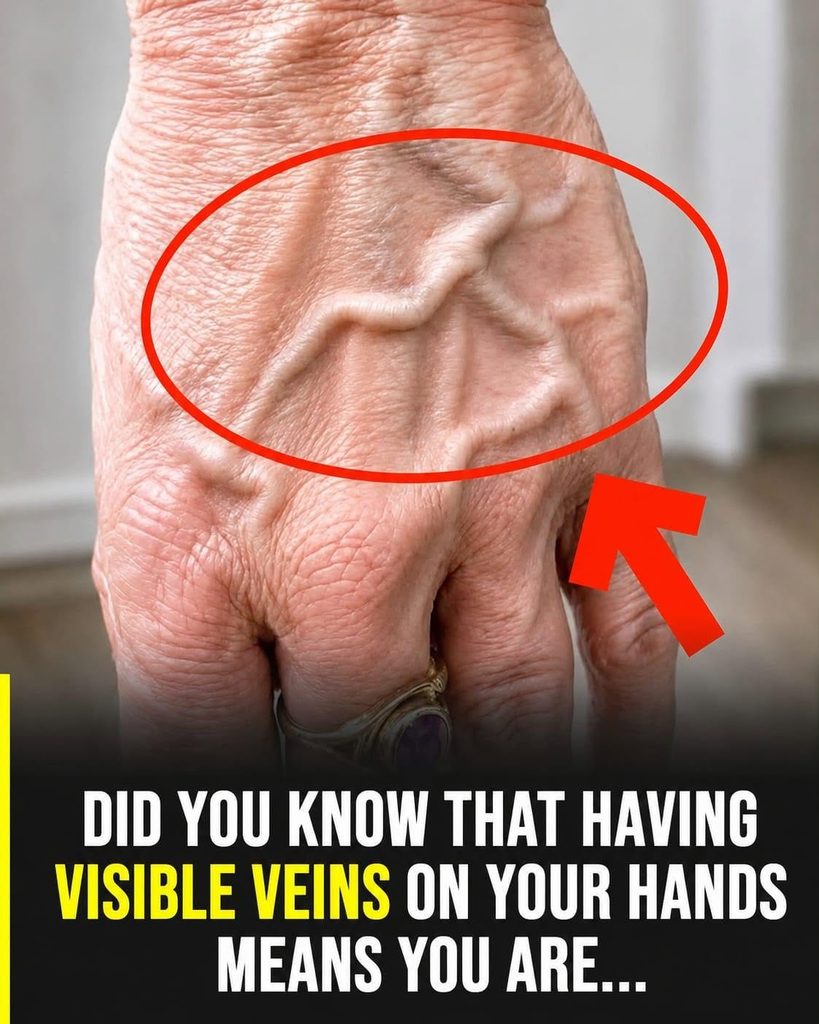
Did you know that having visible veins means you are
Why your veins look more prominent: body signals you should understand
At some point, many people look at their hands or arms and notice that their veins appear more visible or prominent than usual. This often leads to concern and immediate questions about whether it’s a health problem or an abnormal change in the body. However, in most cases, the appearance of prominent veins is due to completely normal factors and poses no risk. Even so, paying attention to this detail can help you better understand what your body is trying to tell you
One of the most frequent causes of prominent veins is body fat percentage . People with a slim build or greater muscle mass tend to have a thinner layer of fat under the skin, making their veins more visible. This is common in those who exercise regularly , especially strength training or intense workouts. During exercise, blood flow increases to deliver oxygen to the muscles, causing the blood vessels to dilate temporarily and become more prominent.
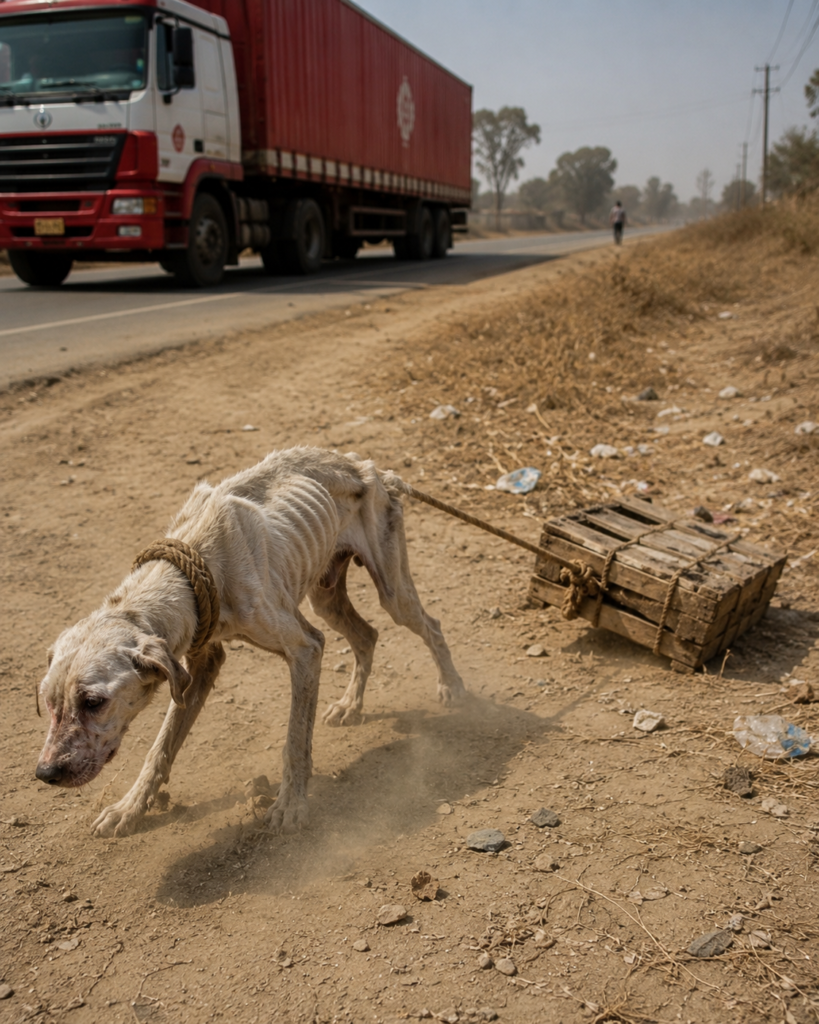
A truck driver slammed on the brakes when he saw a dog dragging a box
Canela watched every step he took, her eyes following him like she was measuring whether humans could be trusted again.
When Miguel returned, Lupita had wrapped the pale puppy inside the corner of her sweater.
She was breathing on him softly, again and again, with the patience of someone afraid to move too fast.
The other puppies made faint sounds inside the box, their bodies pressed together like folded socks in the dirty rags.
Canela lowered her muzzle over them, but her eyes kept returning to the bracelet on the floor.
Miguel noticed that every time Lupita looked at it, the dog’s ears flattened against her head.
“It came from somewhere,” Miguel said. “Someone put it in that box, or someone lost it near her.”
“Or Canela took it,” Lupita said quietly.
Miguel stared at her.
“She dragged six newborn puppies across the highway,” Lupita continued. “Maybe she dragged that bracelet for a reason too.”
Outside, a neighbor’s television laughed through the wall, loud and ordinary, as if the world had not shifted inside apartment 3B.
Then came three hard knocks at the door.
Miguel and Lupita froze.
If You Notice This Insect, Follow These Important Steps
A routine afternoon outdoors can sometimes take an unexpected turn. While handling basic yard work with an older lawn mower, I barely noticed a faint sensation near my ankle and assumed it was nothing more than a passing irritation. My attention was elsewhere, focused on finishing the task while my dog rested nearby. It wasn’t until a moment later that I decided to check, just to be safe.
What I found was a very small, dark insect firmly attached to my skin. It was easy to miss at first glance, but closer inspection made it clear that this was not an ordinary bug. After removing it carefully, I recognized distinctive features that pointed to a lone star tick, a species known for its subtle appearance and active behavior.
Encounters like this can happen more easily than many people realize, especially during everyday outdoor activities. Ticks are often found in grassy, brushy, or wooded areas and can attach without causing immediate discomfort. Because they can remain unnoticed for extended periods, awareness is especially important when spending time outside, even in familiar spaces.
Unlike some other tick species that wait passively, the lone star tick actively seeks a host, increasing the likelihood of contact. Adult females are identifiable by a single light-colored spot on their backs, which gives the species its name. Recognizing these characteristics and responding promptly can help reduce potential risks.