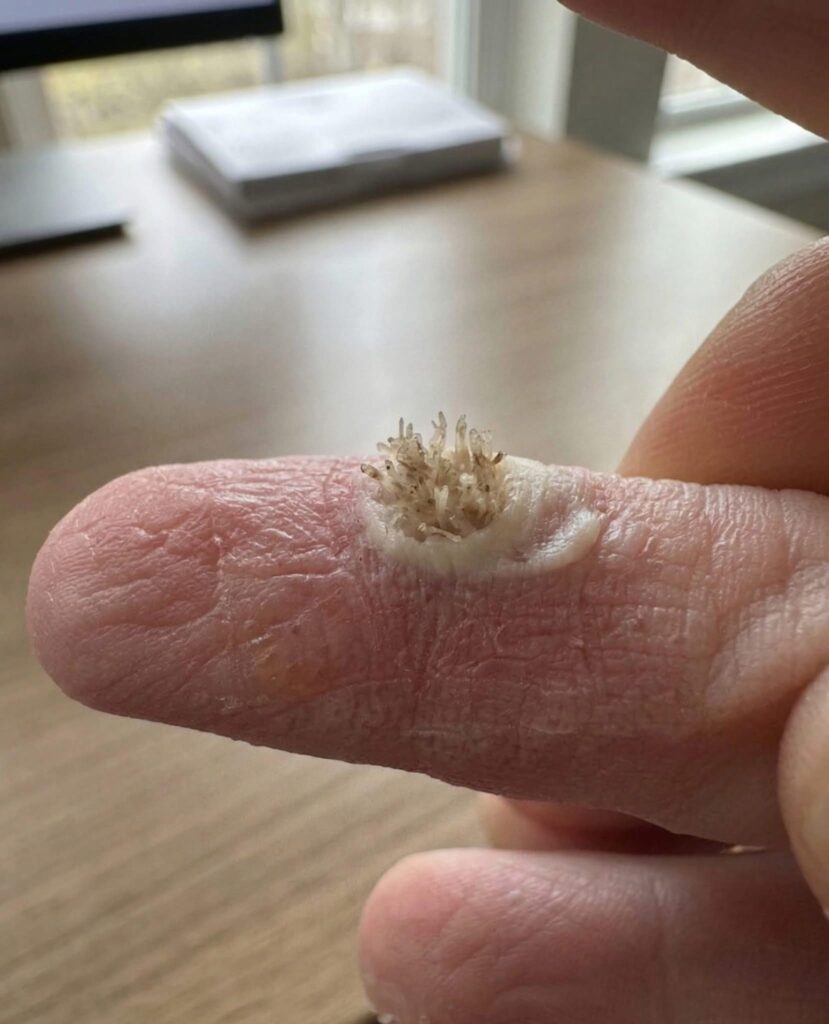
What do periungual warts look like?
Periungual warts develop around the finger and toenails.
Periungual warts form around the nails. At first, they may be the size of a pinhead, smooth, shiny, and translucent.
Over several weeks or months, they may grow to the size of a pea and have a cauliflower-like appearance.
Warts can also turn brown, gray, or black. Eventually, they may form in clusters.
Larger periungual warts sometimes cause pain and discomfort.
Causes and risk factors
Certain strains of human papillomavirus (HPV) cause periungual warts. Other strains have associations with genital warts and cervical cancer.
This virus is contagious, and a person may contract it from contact with skin or items such as towels and toys that contain the virus.
HPV usually enters the skin through a cut or scrape, which is why nail-biters are more likely to develop periungual warts than other people.
Individuals with compromised immune systems or atopic dermatitis are also at increased risk.
Are there complications?
Periungual warts can occasionally cause damage to the nail or nail bed.
A wart growing under a nail can raise it from the skin. Also, periungual warts may cause the loss of a cuticle.
A person with these warts may have an increased risk of developing a soft tissue infection called paronychia. Bacteria, yeast, or a combination of both can cause paronychia. If left untreated, the infection may cause pain and permanent deformity of the nail.
Treatment
Doctors often find periungual warts more challenging to treat than other types of wart. For example, a person may find it difficult to use a topical medication if a wart is growing under the nail.
A doctor may consider the following factorsTrusted Source when recommending treatment:
- the size of the warts
- the number of warts
- the location of the warts
- any accompanying infection
- any pain or discomfort
- the age and gender of the person
- any previous treatments
Potential treatments include:
Salicylic acid
People can use salicylic acid to try to get rid of warts, but it can take time.
Salicylic acid is among the most popular treatments for wart removal.
According to earlier research published by the American Academy of Family Physicians (AAFP), the best available evidence supports its effectiveness.
This acid can destroy the HPV virus. However, it may take up to 3 months of regular applications to eliminate the wart.
Products containing salicylic acid are available over-the-counter (OTC), but it is a good idea to speak with a doctor before using them.
Cryotherapy
In this procedure, a doctor will freeze off warts using liquid nitrogen. Cryotherapy is often a quicker treatment than salicylic acid, but a person may still require three or four treatments spaced 2 to 3 weeks apart.
This treatment has a success rate of 50–70%.
Laser therapy
A doctor may recommend laser therapy if other treatments do not work. The goal is to burn off the wart, but different chemicals may have varying success rates.
A study from 2011 suggests that aminolevulinic acid may be more effective than other chemicals, including the organic dye used in pulsed dye laser therapy.
However, scientists need to carry out more research to determine the best laser treatment for periungual warts.
Antigen injections
A doctor may recommend injecting an antigen to treat stubborn warts. An antigen is a toxin or foreign substance that induces an immune response.
This provoked response should kill the virus and eliminate the growth.
Surgical removal
In severe cases or when the wart is causing complications, a doctor may recommend surgery. However, this may not be an option for all periungual warts.
The surgery takes place in several stages called curettage and cautery. First, the surgeon scrapes or cuts the wart away. Then they use heat to seal the wound.
Although success rates are approximately 65–85%, 30% of people may experience scarring or warts that reappear.
Are there any home remedies?
A person can take steps at home to reduce the appearance of periungual warts.
Wait
The AAFP suggest that “watchful waiting” is a remedy, especially for new warts. Most periungual warts eventually disappear without treatment.
Quit biting
Nail-biters should try to quit the habit as quickly as possible. It increases the risk of periungual warts and other skin infections.
Reduce stress
Stress diminishes the response of the immune system. This can make a person more vulnerable to infection or slow healing time.
To manage stress:
- eat a balanced diet
- exercise regularly
- get enough sleep
- try techniques such as deep breathing, meditation, or progressive muscle relaxation