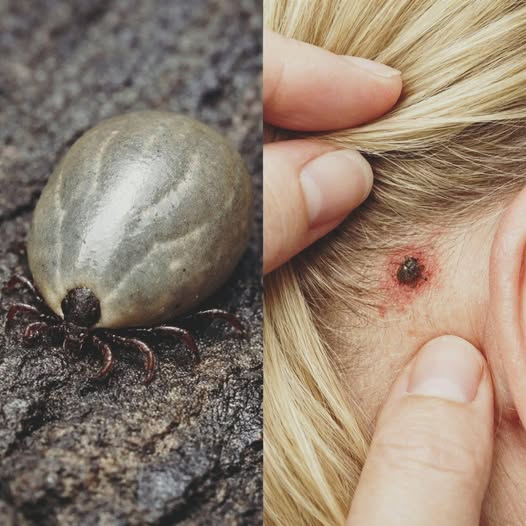
Parenting comes with countless surprises—some fun, some terrifying, and some… creepy-crawly. Recently, I discovered a small insect crawling through my child’s hair, and it sent me on a whirlwind of research, concern, and action. What started as a simple “what is that?” moment quickly became a lesson every parent should know.
The insect in question turned out to be a tick, a tiny arachnid that feeds on blood. While it may seem harmless at first glance, ticks carry serious health risks that can affect both children and adults. Understanding what to do if you discover one is crucial.
How Ticks End Up on Children
Ticks don’t jump or fly—they cling. A child playing outside in tall grass, walking the family dog, or even sitting near shrubs can pick one up. Their small size makes them almost invisible, and they can attach quickly, sometimes unnoticed for hours.
Children are particularly vulnerable because their scalp and neck areas are often not checked regularly, especially after outdoor activities. Long hair can hide these insects, allowing them to latch on and feed for longer periods.
The Risks of Tick Bites
Ticks may seem harmless, but they are vectors for several illnesses, the most common being Lyme disease. Other infections include babesiosis, anaplasmosis, and tick-borne encephalitis in certain regions. Early detection and removal are key to preventing infection.
Identifying a Tick
Ticks vary in size and color depending on their life stage:
- Larvae: Tiny, often hard to see.
- Nymphs: About the size of a poppy seed, slightly translucent.
- Adults: Can be larger than a sesame seed and are easier to spot.
A tick is different from other insects because it has a flattened body and small legs, and it embeds its head in the skin to feed. Unlike lice, ticks usually attach for longer periods and do not move around continuously.