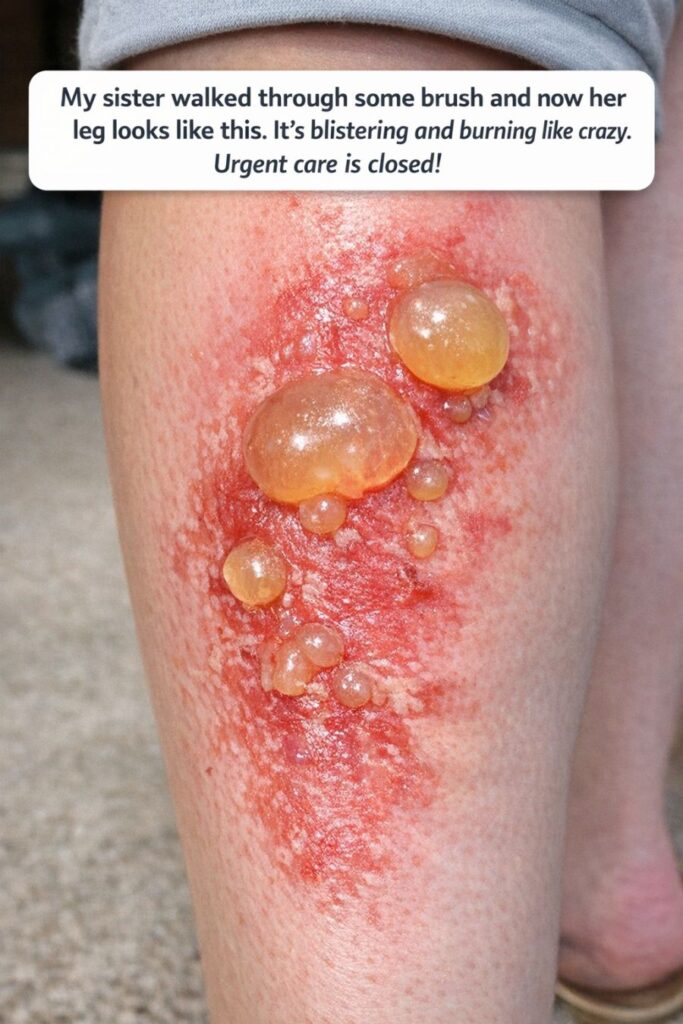
As the sun dipped below the horizon, casting long shadows across the forest floor, my sister and I decided to take a shortcut through some dense brush on our evening hike. Little did we know, this seemingly inconsequential decision would lead to an urgent situation. Moments later, she began to feel a burning sensation on her leg, and we discovered a rash that was rapidly blistering and spreading.
With the nearest urgent care facility already closed for the night, panic set in as we tried to figure out what to do next. The pain was intense, and we needed a plan to alleviate her discomfort and prevent any potential complications. This article will guide you through the steps we took and provide advice on handling similar situations when medical help isn’t immediately available.
1. First, Make Sure She’s Actually Safe and Stable
The first step is to ensure that your sister is safe and stable. Check her vital signs: make sure her breathing is steady and her pulse is regular. If she’s experiencing difficulty breathing or showing signs of an allergic reaction, such as swelling of the face or throat, seek emergency medical attention immediately.
In this case, remove any clothing or jewelry near the affected area to prevent further irritation or constriction. Keep her calm and seated to minimize movement, which could aggravate the rash or cause it to spread further. Ensure she’s in a comfortable position and has access to water and shade if you’re outside.
2. How To Tell If This Is Poison Ivy (Or Another Plant Rash)
Identifying the plant that caused the rash is crucial. Poison ivy, poison oak, and poison sumac are common culprits. Poison ivy typically has clusters of three leaflets with smooth or slightly notched edges, while poison oak’s leaves resemble oak leaves and usually appear in groups of three. Poison sumac has 7-13 smooth, elongate leaflets.
If you suspect a plant caused the rash but aren’t sure which one, look for other symptoms like the blistering pattern. Poison ivy typically causes linear streaks of blisters where the plant brushed against the skin. Search online for images of these plants to compare, but remember that a healthcare provider can provide a definitive diagnosis.
3. Immediate Steps: What To Do In the First 10–30 Minutes
Begin by rinsing the affected area with lukewarm water as soon as possible. This can help remove any plant oils that may still be on the skin. Avoid using soap immediately, as it might spread the oil further.
After rinsing, use rubbing alcohol or an over-the-counter cleansing lotion like Tecnu or Zanfel to help remove any remaining urushiol oil, which is responsible for the rash. Pat the area dry with a clean towel, and avoid rubbing as it might irritate the skin further.
4. What To Put On the Blisters (And What To Avoid)
Once the area is clean, apply a cool compress to help soothe the burning sensation and reduce swelling. Avoid using creams or ointments that contain antihistamines or anesthetics, as they can sometimes worsen the irritation.
Calamine lotion or hydrocortisone cream can be applied to reduce itching and discomfort. Ensure that any product used is safe for application on broken skin, as some blisters may have ruptured.
5. Over-the-Counter Meds That Can Actually Help the Burning
Oral antihistamines like diphenhydramine (Benadryl) can help reduce itching and swelling, providing some relief from the burning sensation. Follow the dosage instructions on the package carefully.
Non-prescription pain relievers such as ibuprofen or acetaminophen can also help manage pain and reduce inflammation. Again, adhere to the recommended dosages and consult a healthcare provider if you have any concerns about drug interactions or side effects.
6. Home Remedies That Are Safe Versus Internet Myths
Cool baths with oatmeal or baking soda can provide relief from itching and help soothe the skin. These remedies are well-documented and safe for most people.
Avoid applying vinegar, bleach, or alcohol directly to the rash, as these can irritate the skin further. Similarly, steer clear of applying essential oils without proper dilution, as they can cause additional allergic reactions.