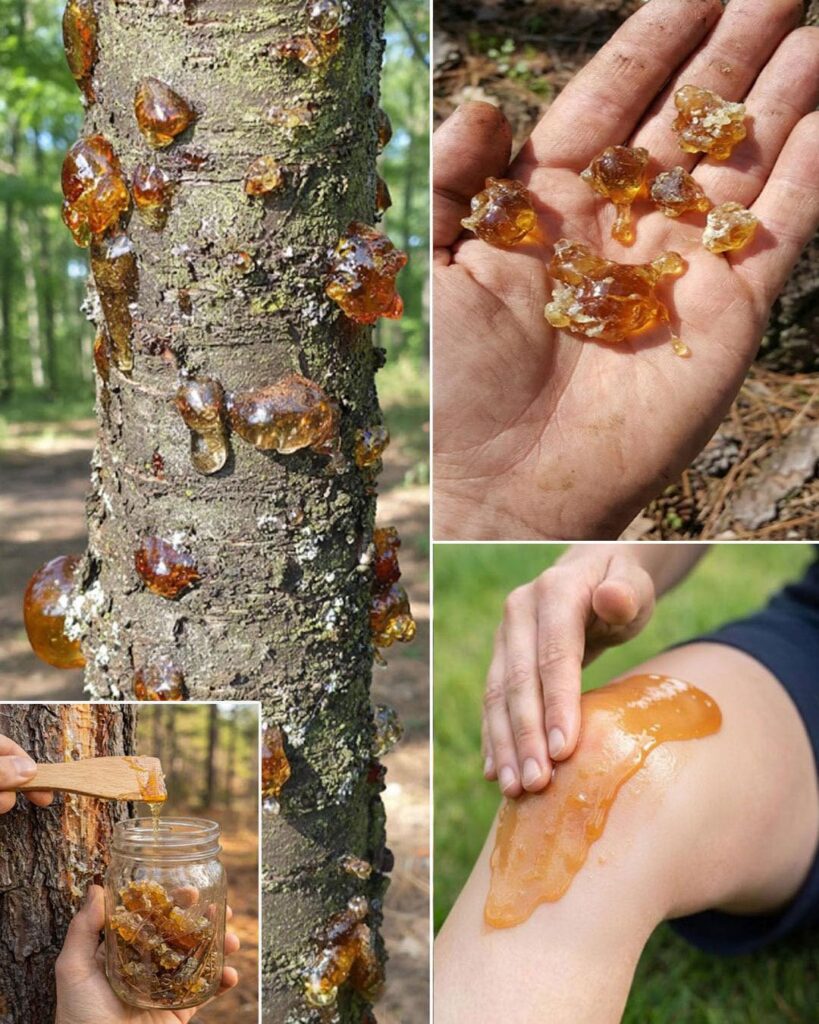
Natural resin oozing from the bark of a tree—a golden, amber-like substance formed when the tree protects itself from injury, pests, or environmental stress. This sticky, translucent material has been valued for thousands of years in medicine, cosmetics, incense, and even food preservation
Tree resin is a thick, sticky secretion that hardens when exposed to air. Trees release it as a self-defense mechanism to:
seal wounds
prevent infection
repel insects
protect against fungi and bacteria
Different tree species produce different types of resin with unique properties—such as pine resin, cherry gum, acacia gum, mastic resin, and frankincense.
Top Benefits of Natural Tree Resin
1.Natural Antimicrobial Properties
Resin contains plant compounds that inhibit bacteria, fungi, and microbes.
Traditionally, it has been used to:
disinfect wounds
protect cuts and scrapes
soothe skin irritations
Pine resin in particular has been applied as a natural topical antiseptic.
2.Anti-Inflammatory Effects
Many resins reduce inflammation when applied externally.
They may help with:
minor joint discomfort
muscle soreness
irritated skin
insect bites
Some cultures used warmed resin poultices to relieve localized swelling.
Natural tree resin
3.Supports Respiratory Health (Traditional Use)
Certain types of resin—especially pine resin—were used historically to support the respiratory system.
People burned resin as incense to:
clear airways
relieve congestion
purify indoor air
Its aromatic compounds act as natural expectorants.
4.Powerful Natural Adhesive
Resins harden quickly and adhere strongly. This made them useful for:
sealing containers
repairing wooden tools
waterproofing leather and fabric
traditional crafting (arrows, baskets, boats)
Even today, resin remains a base material for varnishes and glues.
5.Natural Chewing Gum Alternative
Gums from trees like acacia, cherry, and mastic have historically been used as natural chewing gum.
They can:
freshen breath
stimulate saliva
support oral hygiene
Mastic gum, for example, is still widely used for digestive and dental benefits.
6.Preservative and Thickening Agent
Edible gums such as acacia gum (gum arabic) are commonly used today in:
food and beverage industry
natural candies
syrups
emulsifiers
They help stabilize textures and extend shelf life.
7.Burned as Incense for Purification
Many cultures burn resin for:
spiritual rituals
meditation
cleansing spaces
Pine resin, copal, and frankincense produce a rich, aromatic smoke believed to purify and uplift the environment.
Common Uses of Natural Tree Resin
1.Herbal Balms and Salves
Mixed with oils or fats, resin is used to make natural balms for:
cracked skin
minor wounds
dryness
insect bites
Resin art supplies
2.Natural Fire Starter
Dried resin burns hot and long, making it excellent for camping or emergency kits.
3.Crafting and Woodworking
Resin is used for:
traditional glues
waterproofing
finishing wood
sealing seams